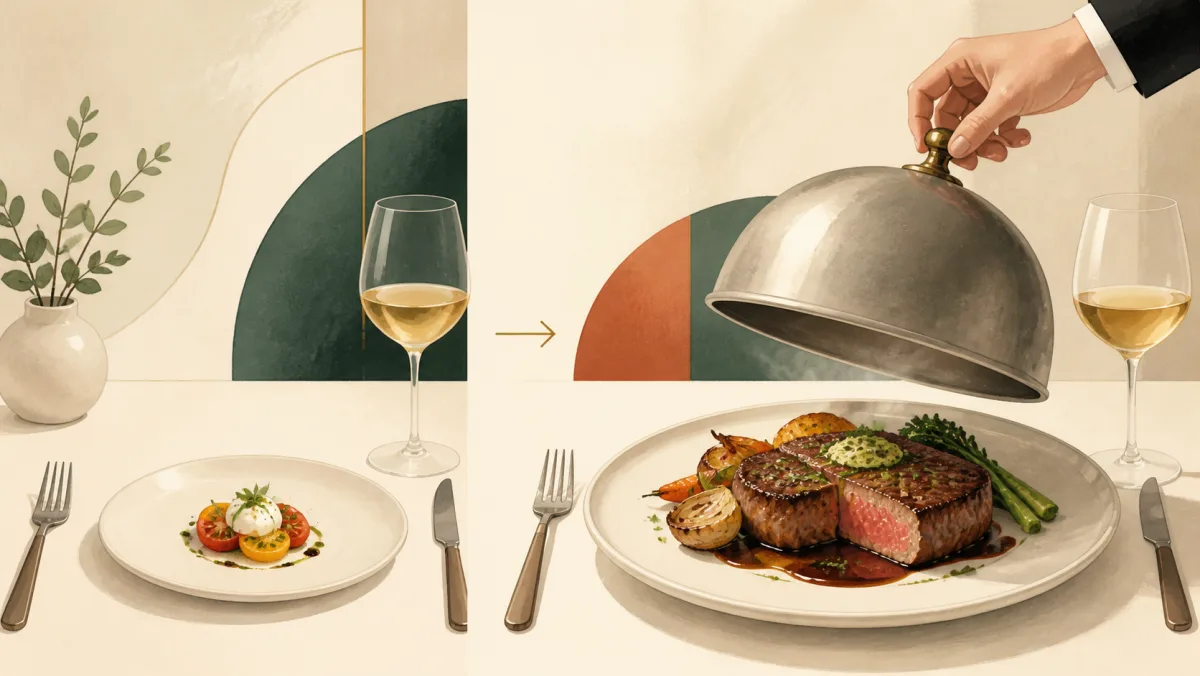
On an American menu, an entrée usually means a main dish, not an appetizer.
“All entrées come with a choice of two sides.”
This likely means each listed main dish includes two side dishes.
The term can confuse travelers because its meaning varies by region. On current US menus, look under Entrées, Mains, or Main Courses. Some restaurants use headings based on their cuisine instead.
What is an entrée in the US?
A US restaurant may organize its menu like this:
- appetizers or starters
- soups and salads
- entrées or mains
- sides
- desserts
An entrée is usually an individual main selection. It could be pasta, fish, meat, or a composed vegetarian dish.
“Which entrée would you recommend?”
“I’ll have the salmon entrée.”
“Can we split an appetizer before our entrées?”
Not every restaurant uses this term. A pizzeria may simply list pizzas. A café may list sandwiches and bowls. A tasting menu may present a sequence of courses. Read the headings instead of expecting one universal structure.
Why can the word cause confusion?
Cambridge Dictionary labels the “main dish” sense as US usage. It records a formal UK sense for a dish served before the main course. In Australia and New Zealand, entrée also commonly means a starter. Actual menu labels can still vary by restaurant.
No regional meaning is inherently more correct. Usage changed with language and dining customs. For an international client event, the wording “main course” is often clearer than entrée.
“The package includes one appetizer, one main course, and dessert.”
Global readers are less likely to misread that wording.
A lot to take in? It is.
But Rome wasn't built in a day. Build your American workplace English one expression and cultural reference at a time—with curated explanations and structured practice in Lyra Practice.
Start a session →What might you hear at a business meal?
“Have you decided on an entrée?”
In a US restaurant, the speaker is asking about your main dish.
“The company is covering one entrée and one nonalcoholic drink per person.”
This states part of the event's ordering or reimbursement limit. It does not say whether appetizers, dessert, tax, or tips are covered.
“Would anyone like to share an appetizer?”
The speaker is proposing a shared starter before the main dishes.
“The entrées are served family-style.”
This may mean shared main dishes will arrive on serving plates. It does not guarantee separate portions or allergy-safe preparation. Ask the restaurant when dietary needs or portion planning matter.
“There’s a prix fixe menu tonight.”
A prix fixe menu offers fixed-price courses, often with limited choices. The number of courses and included items can vary. Confirm the details instead of making assumptions.
What can you say naturally?
When ordering in the US:
“I’d like the mushroom entrée, please.”
When you are unsure about the menu structure:
“Is this served as a starter or as a main dish?”
When planning a team dinner:
“Please send the restaurant any dietary restrictions by Thursday.”
When explaining an expense policy:
“The dinner limit covers a main course and a nonalcoholic beverage.”
When making small talk afterward:
“How was your entrée?”
The last question is natural in US English. How was your meal? is broader and works under any menu system.
Pronunciation and spelling
In US English, entrée sounds roughly like AHN-tray. The traditional spelling has an accent. Entree without it is also common in English text. Follow the restaurant's spelling when quoting its menu.
The word also has a formal non-food sense: access or an introduction.
“The internship gave her an entrée into the industry.”
That sense is separate from food. At work, way into the industry, introduction, or access may sound plainer.
Keep business meals inclusive
Food choices may reflect religion, health, disability, ethics, cost, or preference. Do not press people to explain why they decline something. When hosting, share the menu early when possible. Invite dietary requirements privately and offer suitable choices. Ask the venue about preparation and cross-contact when allergies matter.
If a menu label is unclear, ask the server:
“Could you tell me what comes with this entrée?”
“Can this dish be prepared without dairy?”
Clear questions are more reliable than guessing from a dish name.
For table conversation, see how to make small talk in English at work. For sensitive topics, read how much personal information to share at an American workplace.