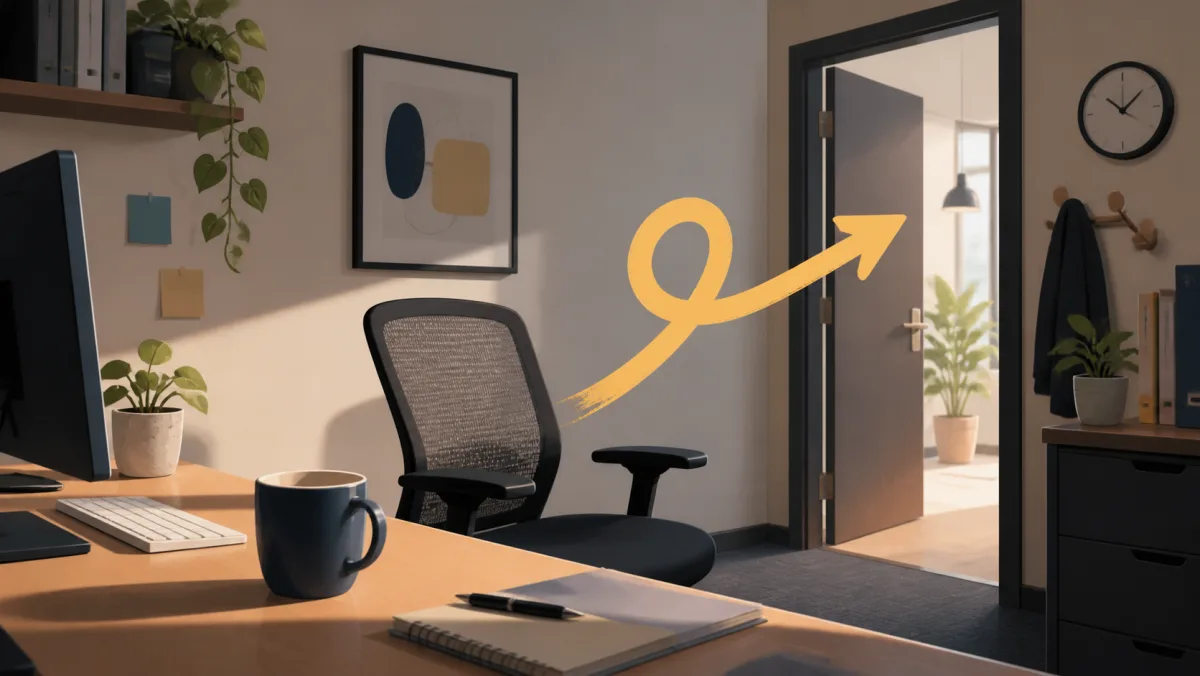
“I’ll be back” means that the speaker will return. It is also a famous line from the 1984 film The Terminator, where actor Arnold Schwarzenegger delivers it. At work, tone and context tell you if it is a schedule update or a movie joke.
“I’m getting coffee. I’ll be back in ten minutes.”
This is likely a plain schedule update.
“I’m going to fix the printer. I’ll be back.”
With a deliberate, dramatic delivery, this may point to the film.
Where does the phrase come from?
The words are basic English and are older than the film. Director James Cameron's The Terminator made the sentence a famous catchphrase. The American Film Institute lists it among well-known American movie quotes.
The film association can add confidence, menace, persistence, or comic drama, depending on the delivery. A person can also use the same words with no film reference.
This guide uses only the short phrase. It does not copy the scene, more dialogue, or the plot.
Literal meaning versus cultural meaning
Literal:
“I’ll be back after lunch.”
The speaker promises to return and gives a time.
Cultural:
“The bug survived my first fix, but I’ll be back.”
The speaker may be joking that they will not give up.
The movie reading is more likely when the phrase stands alone or sounds dramatic. In text, quotation marks, an emoji, or surrounding film talk may signal the joke, but these clues are not certain.
A lot to take in? It is.
But Rome wasn't built in a day. Build your American workplace English one expression and cultural reference at a time—with curated explanations and structured practice in Lyra Practice.
Start a session →What might you hear at work?
“I have another call, but I’ll be back for the decision.”
This is likely a simple attendance update.
“The procurement form rejected me again. I’ll be back.”
This may joke about trying the system again.
“He said ‘I’ll be back’ in the Terminator voice.”
The speaker clearly names the imitation.
“Are you returning today?”
This question is useful because the phrase gives no return time.
What can you say naturally?
To make the literal promise clear:
“I’ll be back online at 2:30 p.m. Eastern time.”
To respond to the joke:
“We’ll be ready for your return.”
To clarify:
“Do you mean after lunch, or another day?”
To avoid the reference:
“I’m stepping out for 20 minutes and will rejoin the call.”
To recognize it:
“That sounded like the Terminator line.”
You do not need to copy the actor or add more lines from the movie.
Recognition before production
When you hear I’ll be back, start with the literal meaning and look for a return time or operational context. Assume a film joke only when tone or other clues support it.
For a schedule update, add a time because the phrase alone does not say if you will return today, tomorrow, or after leave.
Use the joke only in a low-risk setting with people you know. Not every audience knows The Terminator, so others may hear only a strange or forceful promise. Do not test colleagues' cultural knowledge or ask them to imitate it.
Tone, hierarchy, and threatening readings
In the film, the line can sound threatening. At work, that undertone may become comic exaggeration, but it is not safe in every setting.
Avoid it after a conflict, rejected request, disciplinary meeting, security action, or termination of employment because “I’ll be back” may sound like a threat. Never direct it at a person who has expressed fear or asked you to stop contact.
A manager should not use the catchphrase to hint at pressure or constant checks:
“You haven’t finished, so I’ll be back.”
That can feel scary. Give a clear check-in time and offer help instead:
“I’ll check in at three. Let me know before then if the dependency remains blocked.”
In a physical-security setting, follow policy for an unclear return statement without making public claims about the person's intent.
International and asynchronous teams
The word back depends on a place or state of return, such as online, in the office, in a meeting, or back from leave. Name it when the distinction matters.
Time zones can make “later” unclear. Instead of “I’ll be back this afternoon,” give a time:
“I’ll be back online at 3:00 p.m. London time on Tuesday.”
If no one depends on the exact time, the short phrase is fine; add detail when it helps the work.
For another forceful movie line, see “You can’t handle the truth”. For a famous request to escape, see “Beam me up, Scotty”.
Copyright and brand awareness
The phrase's association with The Terminator does not grant rights to its clips, music, logos, character designs, or actor likenesses. A casual joke differs from an advertising campaign.
Use appropriate legal and brand review for public promotions; this guide uses only the short phrase needed to explain the cultural reference.
The practical takeaway
“I’ll be back” is ordinary English and a famous Terminator line whose delivery can create the movie link. At work, add a return time when people need one, use the joke only in safe and casual settings, and avoid it when the film's threatening tone could alarm someone.