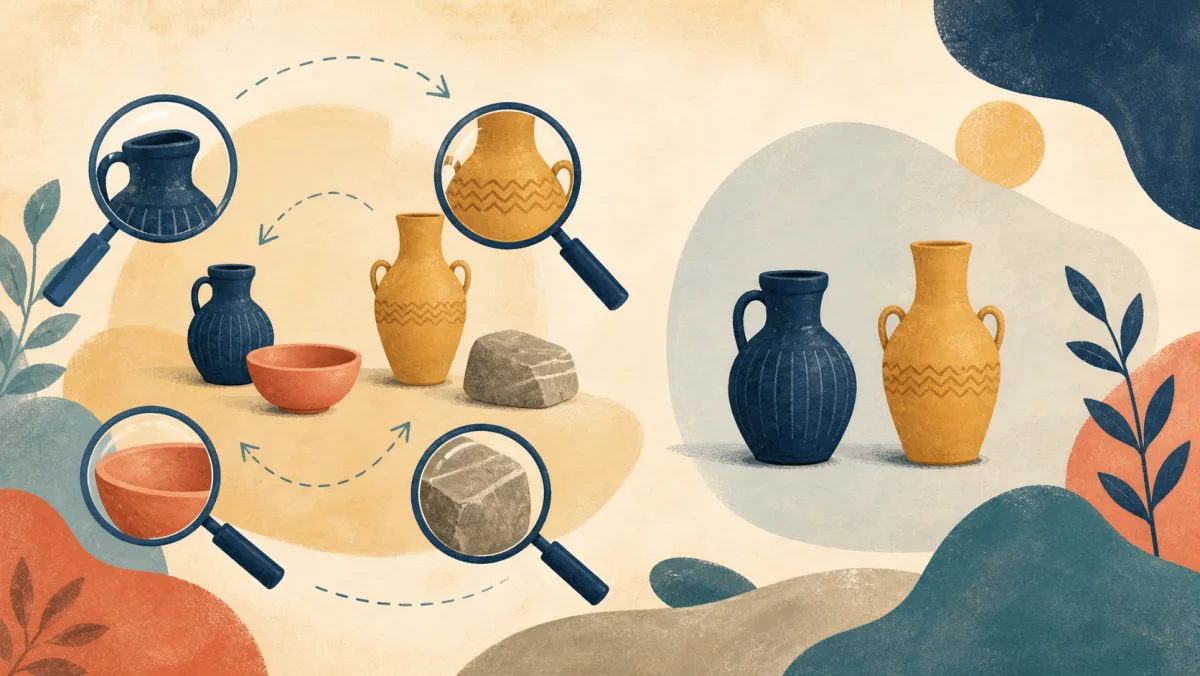
Compare and juxtapose can both bring two things into one discussion. They focus on different actions.
Compare means examine similarities, differences, or both. Juxtapose means place things close together, often to highlight a contrast or create an effect. The placement can be visual or verbal.
Compare describes a process
Compare can describe an analysis, a quick judgment, or a side-by-side display. It does not require a special layout.
"We're comparing the three pricing plans this week before the renewal call."
The team is still reviewing the plans. The sentence does not say how the results will appear.
Juxtapose describes close placement
Juxtapose names close placement. A writer may juxtapose images, quotes, ideas, or results. The writer can still explain the comparison directly.
"We juxtaposed the three pricing plans in one table so the client could see the gap without us walking through it."
Here, the table places the plans together and highlights a gap. A paragraph could also juxtapose two views in nearby sentences.
Want to get better at distinctions like this?
Lyra Practice helps you learn the nuance of high-value workplace expressions, then practice using them in realistic situations.
See how Lyra Practice works →The practical difference
Compare can answer:
"How did we evaluate these two things?"
Juxtapose can answer:
"How did we make the difference (or the alignment) visible without spelling it out?"
Compare:
"The analyst compared the two quarters and found margin had compressed."
With:
"The report juxtaposes the two quarters' margins side by side, without further comment."
The first states an analysis and result. The second stresses how the report places the figures. It could still add a written conclusion.
The rule
Use compare for the act of examining similarities or differences. Use juxtapose when close placement is part of the point. You can compare items by juxtaposing them, so the verbs may describe the same work. Neither word fixes the project stage or requires silence from the writer.
Practice scenarios
Practice choosing between juxtapose and compare in situations like:
- describing an evaluation that's still in progress
- describing a finished deck or table that places two figures side by side on purpose
- writing a sentence where the placement itself, not a stated conclusion, is doing the persuasive work
Useful practice phrases:
- "We're comparing [X] and [Y] before the call."
- "The deck juxtaposes [X] and [Y] so the gap is visible at a glance."
- "We compared the options, then juxtaposed the two finalists in the appendix."
Compare stresses examination. Juxtapose stresses close placement, often for contrast or effect.
Lyra Practice helps advanced non-native English professionals learn the nuance of high-value workplace expressions and practice using them in realistic scenarios, so their English sounds natural, precise, and senior at work. Try Lyra Practice.