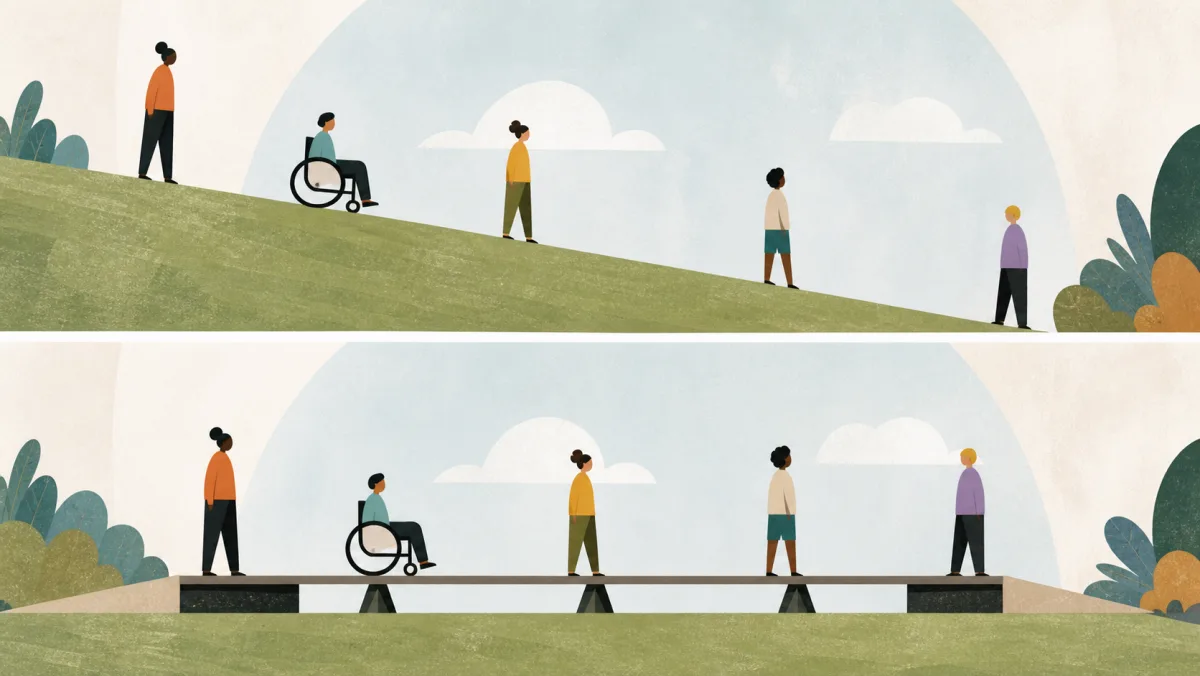
To level the playing field means to reduce unfair advantages or barriers. The goal is to help people or groups take part on fairer terms.
“Publishing the interview questions in advance could help level the playing field.”
The speaker believes access to information is uneven and suggests a change. The phrase supports fairness but does not define what fairness requires.
The literal sports image
A playing field is the area where a game occurs. Level suggests an even surface, not one tilted toward one side. Football rules, for example, mark the same field for both teams.
The metaphor applies that image to access, information, resources, or rules. A level field does not promise equal results. It suggests reducing unfair conditions.
You need no sports knowledge. The core image says the setting should not be tilted.
Common workplace meanings
Equal access to information
“A shared requirements document will level the playing field for remote teams.”
Everyone can use the same source instead of relying on hallway talks.
Reduce structural barriers
“Captioning the training may help level the playing field.”
Access tools can improve participation. The right support should reflect real needs, not guesses.
Standardize evaluation
“Using the same scoring rubric should create a more level playing field for candidates.”
Consistency may reduce some bias. A shared rubric is not fair just because it is standard.
A lot to take in? It is.
But Rome wasn't built in a day. Build your American workplace English one expression and cultural reference at a time—with curated explanations and structured practice in Lyra Practice.
Start a session →Correct a market advantage
“The new rule is intended to level the playing field between small and large vendors.”
This use is common in policy and market talks. People may disagree about whether the rule works.
What you might hear and how to respond
If someone wants to level the field, ask which imbalance they mean:
- “Which barrier or advantage are we trying to address?”
- “Who is currently excluded or disadvantaged?”
- “What evidence will show the change helped?”
- “Does the same rule create a different burden for some groups?”
- “Who should be consulted before we choose the solution?”
If you support the goal but need more detail:
“I agree with the fairness objective. Let’s name the information gap and test whether the proposed process closes it.”
How to use it naturally
Common patterns include:
- level the playing field for someone
- create a level playing field
- compete on a level playing field
- the playing field is not level
Clear alternatives include:
- “give every candidate the same core information”
- “remove this access barrier”
- “apply consistent evaluation criteria”
- “provide equitable access to the training”
- “reduce the advantage created by exclusive data”
These options name the method instead of making a broad fairness claim.
Equality, equity, and oversimplification
People sometimes use the phrase to mean identical treatment. But the same treatment is not always fair. Some people may need different tools or support to access the same opportunity.
The metaphor may suggest that one change removes every past or built-in difference. It usually does not. Careful wording helps:
“This should reduce one information barrier.”
That is more credible than calling the whole process fair.
For bias, disability, pay, hiring, or promotion, follow policy and the relevant legal process. A sports phrase is not a legal test or an individual review.
Tone, hierarchy, and global audiences
The phrase is common in policy and business and often sounds positive. Still, the field is already level can dismiss a report of a barrier. Ask for evidence instead of assuming your view is complete.
Leaders should not use it as public-relations language without real changes. Staff may fairly ask which resource, access rule, or practice will change.
Global colleagues may know the phrase, but plain words are easier to translate. No one should need sports knowledge to discuss fairness.
Recognition versus production
When you hear the phrase, think reduce an unfair advantage or barrier. Then ask which one. When using it, name the action, group, evidence, and limits.
Compare “move the goalposts”, which criticizes standards that change during the attempt, and “high visibility” at work, where unequal access can influence recognition.
The practical takeaway
Level the playing field expresses a fairness goal. It does not promise equal results or prove a legal point. Name the imbalance, involve affected people, and test whether the change helps.