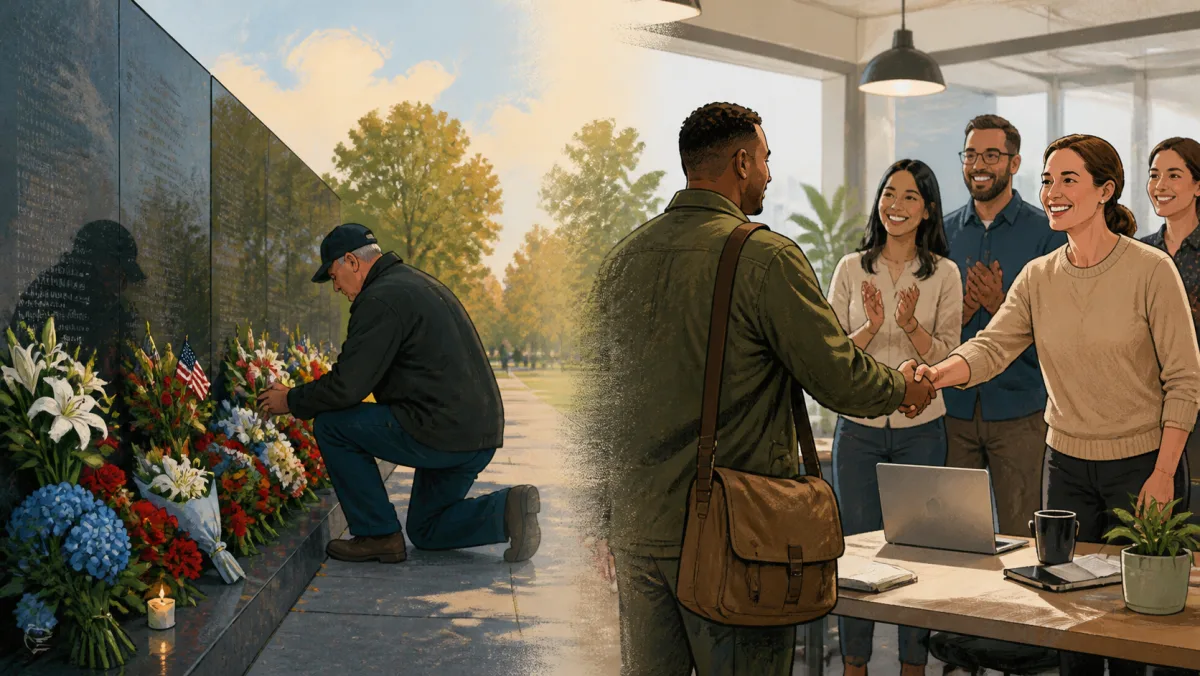
Memorial Day and Veterans Day are US federal holidays with different purposes. Memorial Day honors US military members who died in service. Veterans Day honors those who served honorably, living and dead. It places special emphasis on living veterans.
People sometimes confuse the two days. Remember one key difference at work: Memorial Day centers those who died; Veterans Day recognizes all who served.
When are the two holidays?
Memorial Day falls on the last Monday in May. Many people receive a three-day weekend and call it summer's informal start.
Veterans Day is always November 11. For eligible full-time federal workers, “in lieu of” rules may change the day off. These rules matter when November 11 falls on a nonworkday.
Federal law names both days, but private firms may stay open. Many hospitals, stores, travel services, and support teams still work. Days off and extra pay at private firms depend on work rules, contracts, and law.
What you might hear around Memorial Day
"Any plans for Memorial Day weekend?"
This is often ordinary small talk about travel, gatherings, or rest. The relaxed question does not erase the day's meaning. People balance remembrance and time off differently.
You could answer:
"I'm staying close to home. How about you?"
"No major plans, but I'm looking forward to the long weekend."
You may also hear:
"The office will be closed Monday in observance of Memorial Day."
In observance of is a formal way to say the workplace marks the day. It may close or hold an event.
Some workplaces share a message or hold an event. Others simply list the day. Neither choice reveals each worker's beliefs or link to military loss.
A lot to take in? It is.
But Rome wasn't built in a day. Build your American workplace English one expression and cultural reference at a time—with curated explanations and structured practice in Lyra Practice.
Start a session →What you might hear around Veterans Day
"We'd like to recognize the veterans on our team."
Here, veterans means people with prior armed-forces service. Do not assume each veteran wants public thanks. Service, discharge status, disability, combat, and loss can be private subjects.
"Thank you for your service."
This common phrase is addressed to a veteran. Some welcome it, while others prefer less attention. If a colleague has mentioned their service, a brief response may fit.
"Thank you for sharing that."
"I appreciate your service."
Do not ask whether they fought, killed anyone, were injured, or lost friends. Those questions are highly personal.
Should you say “Happy Memorial Day”?
You may hear Happy Memorial Day in ads and casual speech. Speakers often mean “enjoy the long weekend.” Some people feel happy does not fit a day for those who died.
A careful workplace alternative is:
"I hope you have a meaningful Memorial Day weekend."
Or, when the conversation is mainly about time off:
"I hope you have a restful weekend."
For Veterans Day, you might say:
"I hope you have a meaningful Veterans Day."
In a staff message, do not assume every veteran wants public thanks. Workers may also hold different views about military institutions. A factual note can honor service while leaving room for those views.
Workplace phrases and possible misunderstandings
"We'll revisit this after Memorial Day."
This usually means the discussion will resume after the late-May day off.
"She is a veteran of the industry."
Here, veteran may mean a very experienced person. It does not always refer to military service. “A software-industry veteran” describes work experience; “an Army veteran” describes military service.
"This project has battle scars."
This phrase points to signs of a difficult past. War metaphors can sound dramatic or insensitive near talks about real loss. Clearer choices include lessons from earlier failures, long-running issues, or evidence of a difficult rollout.
What organizers and managers can say
For a closure:
"The US office will be closed Monday for Memorial Day. Please confirm urgent coverage by Friday."
For an optional observance:
"Employees who wish to attend the remembrance event can find details here. Participation is optional."
For Veterans Day without forced disclosure:
"Today we recognize those who have served. We also respect that employees may choose whether to share their own connections to military service."
Do not ask former service members to speak without private consent in advance. Also, do not treat one person as speaking for the military or every member.
A simple way to remember the difference
Use this internal summary:
- Memorial Day: remember military personnel who died in service; last Monday in May.
- Veterans Day: honor those who served honorably; November 11.
Then respond to the context. Clarify closures during schedule talks. During remembrance or service talks, listen and use restrained language. Skip a personal question unless you know it is welcome.
For another US holiday that can mix public meaning with relaxed workplace small talk, see Fourth of July workplace small talk. To understand why a federal observance may not close your company, read federal holiday versus company day off.
Sources and a practical caution
- US Department of Veterans Affairs: Veterans Day facts and the Memorial Day distinction
- US Office of Personnel Management: federal holiday schedules
- US Office of Personnel Management: “in lieu of” holiday rules
- US Department of Labor: holiday pay
This article offers broad cultural guidance, not legal, HR, or health advice. Follow workplace rules and let people tell their own stories.