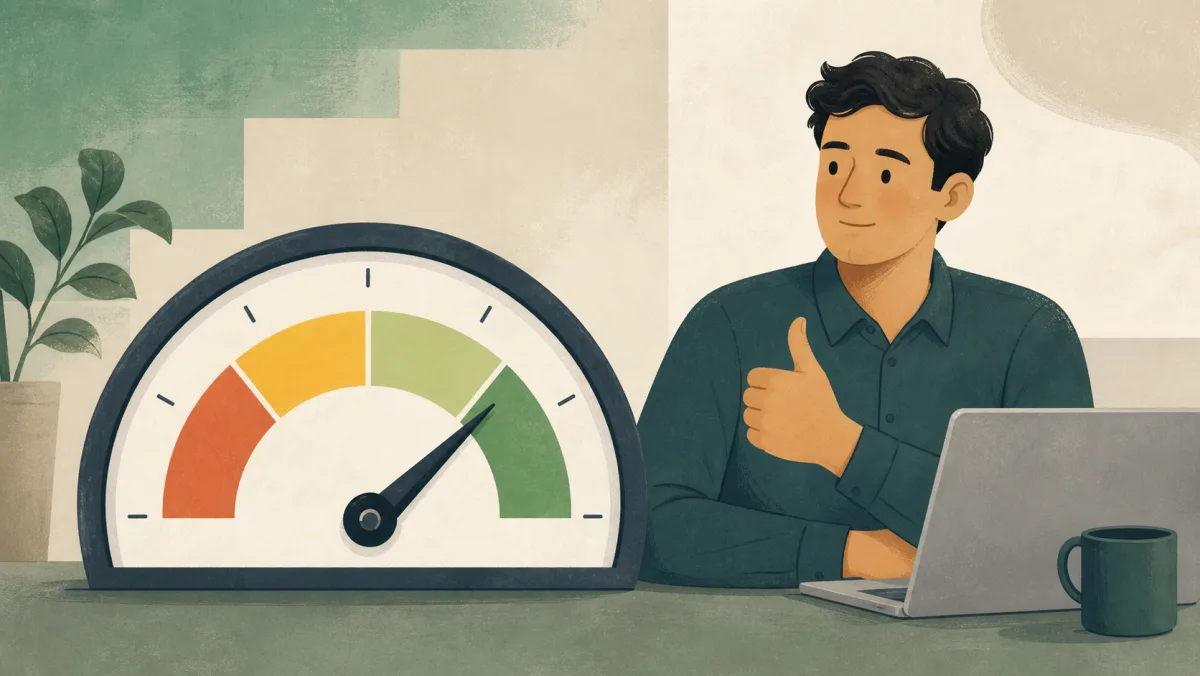
Not bad can range from acceptable to very good. Dictionaries record both moderate and strong positive senses, so context shows where the speaker falls on that range.
“You cut the processing time by 30 percent? Not bad!”
The clear result and excited tone make praise likely. Negative grammar does not make the meaning negative.
Why English uses a negative form for praise
This is understatement, because the speaker gives praise by denying the opposite. It may sound calm, dry, or pleased. Stronger praise might feel excessive.
The phrase does not always give strong praise:
“How was the hotel?”
“Not bad.”
The hotel may have been fine but forgettable. Later complaints may point to a merely acceptable rating.
Likely readings at work
Genuine, strong approval
“That’s your first client presentation? Not bad at all.”
A smile, surprise, at all, or added praise can strengthen it.
Moderate approval
“The first draft isn’t bad. The introduction still needs work.”
The work seems promising but unfinished. Isn’t bad may sound more measured than Not bad!
A lot to take in? It is.
But Rome wasn't built in a day. Build your American workplace English one expression and cultural reference at a time—with curated explanations and structured practice in Lyra Practice.
Start a session →Faint praise
“The proposal is not bad.”
In a formal review, this may mean only adequate. Without details, some listeners may hear faint praise.
Sarcasm
After a poor result, “Not bad” can mean the opposite. A clash with the facts, forced tone, or laughter may signal sarcasm. A flat voice alone does not prove it.
What you might hear and how to respond
If a manager says “Not bad,” you can ask what it means for the work:
- “Thanks. What would make the next version stronger?”
- “Glad the direction works. Are there any changes before I finalize it?”
- “Should I read that as approval to send it?”
- “Which parts should I preserve?”
These questions clarify both the rating and next step.
If a peer says it with warmth, “Thanks!” is natural. The positive reading is common.
How to use it safely
Use not bad in low-stakes moments when approval is clear:
“Not bad—we finished ahead of schedule.”
For work feedback, add a clear positive detail:
“Not bad at all. The new structure makes the recommendation much clearer.”
If the rating must be clear, use direct words:
- “This meets the requirements.”
- “This is strong work.”
- “I approve this version.”
- “The analysis is good, but the recommendation needs evidence.”
In email or formal reviews, direct wording is safer.
Hierarchy and identity sensitivity
A leader may intend warm praise while a junior worker hears doubt. Managers should not make staff decode important feedback. State whether the work meets the standard and what succeeded.
For English, accent, appearance, food, culture, or access needs, not bad may sound patronizing. Surprise can make that risk worse. Focus on the relevant work and avoid unwanted ratings.
American speakers do not share one response to understatement. Family, region, work, and personality matter. Some teams praise loudly; others stay restrained. Nationality alone cannot predict intent.
Recognition versus production
When listening, place not bad on a scale from acceptable to excellent. When speaking, use it where ambiguity costs little. Sensitive feedback needs direct words.
Compare “good for you” as support or dismissal, another positive-looking reaction shaped by delivery. American deadpan humor explains why a neutral voice does not reliably prove a negative intent.
The practical takeaway
Not bad can be a real compliment, but its strength varies. Tone, results, and later comments help explain it. At work, clarify approval and next steps. Use direct praise when the stakes are high.