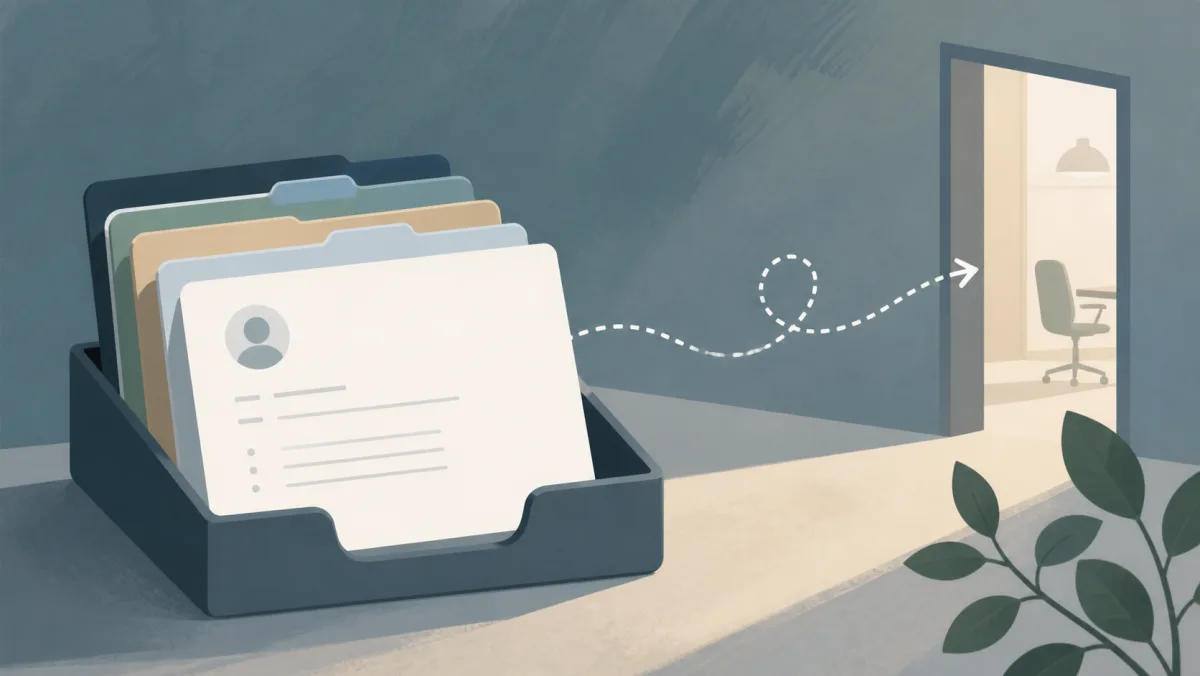
We’ll keep your résumé on file means the employer may retain your application. The current hiring process has ended, but the company may keep your information. This phrase does not promise future contact or a place in every search.
“We selected another candidate, but we’ll keep your résumé on file.”
The current answer is no. The final clause leaves open a possible future link. However, its value varies widely.
What “on file” can mean
The employer might:
- retain your application in an applicant-tracking system
- search prior candidates for later openings
- place you in a talent pool
- retain records to meet policy or legal obligations
- use a standard rejection template without an active future plan
These outcomes are not the same. If future review matters, ask whether you must reapply.
Retention is not active consideration
U.S. employers may have duties to keep hiring records. EEOC guidance sets time limits for certain records held by covered employers. Other rules can apply to schools, governments, federal contractors, and open claims.
Legal or policy retention does not mean a recruiter is reviewing the résumé. However, a company may actively maintain talent communities for future recruiting. The phrase alone does not reveal which process applies.
A lot to take in? It is.
But Rome wasn't built in a day. Build your American workplace English one expression and cultural reference at a time—with curated explanations and structured practice in Lyra Practice.
Start a session →What you might hear
“We’ll keep your information for future opportunities.”
This sounds positive but gives few details.
“Your profile will remain active for six months.”
The employer gives a period, but new applications may still be required.
“Please apply again when you see a suitable opening.”
Do not wait for contact; submit a new application.
“May we contact you about similar roles?”
This clearly asks to contact you about future jobs. Read the privacy notice before agreeing.
How to respond
A brief response keeps the relationship professional:
“Thank you for the update and for considering me. I remain interested in the company, particularly future operations roles. Should I submit a new application when a relevant position opens?”
You can also ask:
- “How long will my profile remain active?”
- “Can I update my résumé in the system?”
- “Is there a talent community I should join?”
- “Who can answer questions about data retention or deletion?”
- “Will my information be shared with affiliates or agency clients?”
Do not expect the recruiter to create a role or give personal feedback.
Should you reapply?
Usually, follow the new posting’s instructions. Systems, role requirements, and hiring teams can change. A stored résumé may not count as a new job application.
When reapplying, update the document and add any useful new experience. If a recruiter invited you to reapply, mention the earlier conversation:
“You encouraged me to apply for future analytics openings after our March interview. I’ve now led the migration project mentioned in our conversation.”
That is more useful than “My résumé should already be on file.”
Privacy and status sensitivity
A résumé can contain your location, work history, and contact details. Read the employer’s or agency’s privacy notice. Ask before an outside recruiter shares it with clients. Do not send identity papers, bank details, or other sensitive data with a résumé.
EEOC recordkeeping and federal anti-discrimination rules may apply. State privacy laws and employer practices also vary. Send data requests through the company’s official privacy channel. Keep a copy of any request you send.
Employers should not imply active future consideration merely because records must be retained. Clearer wording is:
“We retain applications for one year under our policy. Please apply separately to future openings.”
This article gives general information, not legal advice. Time limits and data rights depend on the employer, location, contract, and facts.
Recognition versus production
When you hear on file, understand it as retained, not shortlisted. Ask whether future roles require a new application. Employers should separate stored records from active recruiting.
Compare “keep in touch” after an interview, which is interpersonal, and “going in a different direction”, which often communicates the current rejection.
The practical takeaway
“We’ll keep your résumé on file” leaves a possibility open but makes no hiring promise. Thank the employer and ask about reapplication and privacy practices. Keep searching, and update your materials for each relevant opening.