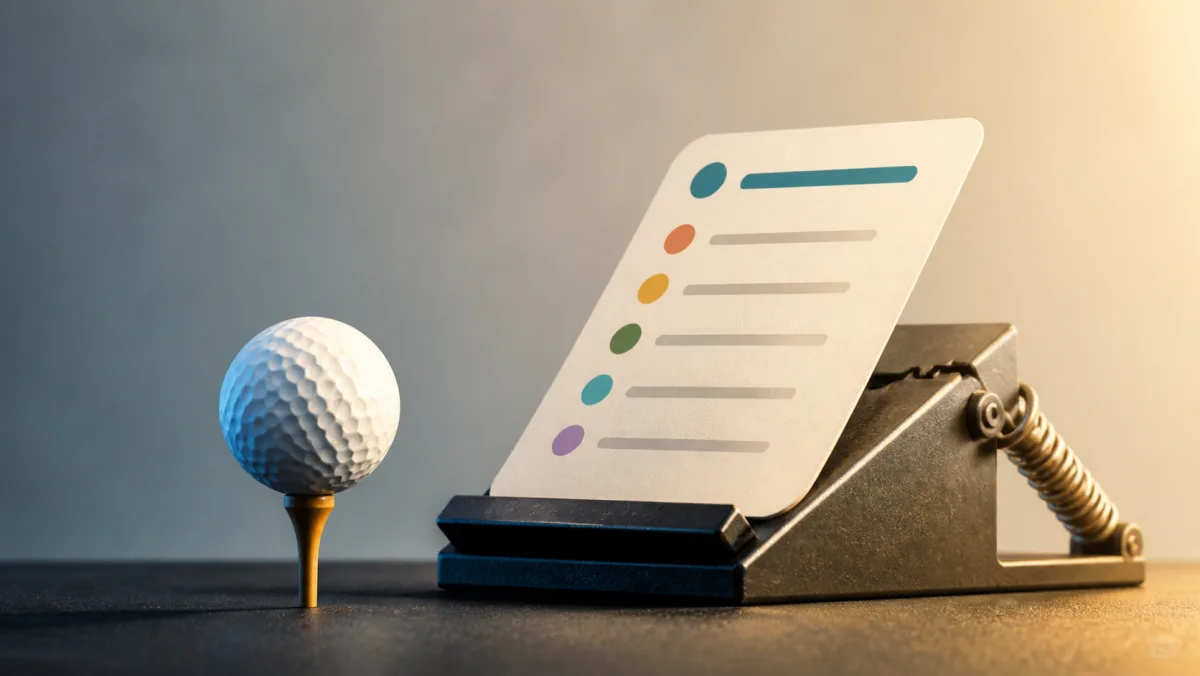
To tee up a discussion means to prepare or introduce it so people can address the topic with enough context.
“I’ll tee up the budget discussion with a one-page summary.”
The speaker will set up the starting point, but they may not lead or make the final decision.
The literal golf image
In golf, a tee can hold a ball above the ground, and the teeing area is where a player starts a hole. Under USGA rules, a player may put the ball on a tee in that area, but does not have to use one.
At work, the image is of putting something in place for the next step. You can tee up a discussion, decision, question, introduction, or task.
You do not need to know golf to use the phrase. A plain meaning is get something ready for the next person or step.
What can “tee up” include?
Provide background
“Could you tee up the issue for the executives?”
The person may need to sum up the context, options, and choice to be made.
Put an item on the agenda
“I’ll tee this up for Friday’s meeting.”
This may mean adding it to the schedule, so check if the person also wants you to prepare notes or options.
Introduce another speaker
“Priya will tee up the customer segment, then Luis will present the data.”
Priya gives the group enough context for Luis to continue.
A lot to take in? It is.
But Rome wasn't built in a day. Build your American workplace English one expression and cultural reference at a time—with curated explanations and structured practice in Lyra Practice.
Start a session →Prepare a decision
“The working group will tee up a recommendation for the steering committee.”
The group prepares the material, while the committee still makes the decision.
What you might hear and how to respond
Because tee up is broad, ask what result the person expects:
- “Do you want an agenda item, a briefing note, or a recommendation?”
- “Who is the audience and decision-maker?”
- “Should I present options or propose one choice?”
- “What context does the group already have?”
- “When does the material need to be ready?”
If you accept:
“I’ll prepare a one-page brief with the decision, options, and open risks by Thursday.”
That reply turns a broad phrase into a clear task and due date.
How to use it naturally
Common objects include:
- tee up a discussion
- tee up the next topic
- tee up a decision
- tee up a question
- tee someone up for an introduction
This phrasal verb is informal business English and does not often mean that you finished the work. If you say “I teed up the analysis,” people may think you prepared it for someone else to use.
Literal alternatives include:
- “prepare the discussion”
- “add the issue to the agenda”
- “brief the group”
- “introduce the topic”
- “prepare a recommendation for decision”
Choose the verb that best names the real task.
Tone and global-audience caution
Tee up can sound friendly and brisk, but it can also make an assignment vague. A manager may know what “tee this up” means in that team, while a new employee may only hear a golf image.
Do not assume that coworkers know the sport. For a global group or a formal message, prepare a one-page brief is clearer. If you use the idiom, also name the task.
The phrase can also hide work. Research, planning, and asking for input can take time even when tee up sounds like a small task. Agree on the scope and give people fair credit for that work.
Hierarchy and decision rights
Preparing a discussion does not give someone the right to decide. Say who will decide and whether others are advising, approving, or carrying out the work. A leader should also avoid asking a junior person to “tee up” a fixed result while saying that the choice is still open.
Clarify the stage:
“Is the group choosing among options, reviewing a recommendation, or receiving an announcement?”
This question helps the group avoid a false show of agreement. It also helps the presenter choose the right material.
Recognition versus production
When you hear tee up, think get ready for the next step. Then name the output and stage of the decision. When you use it, say what the work includes and who acts next.
Compare how to socialize a decision that is already final and what “going in a different direction” means. For another golf expression, see “par for the course”.
The practical takeaway
To tee up a discussion is to prepare its starting point. It does not always mean deciding or finishing the work. You can ignore the golf image. Name the audience, task, decision stage, owner, and due date so everyone knows what “prepared” means.