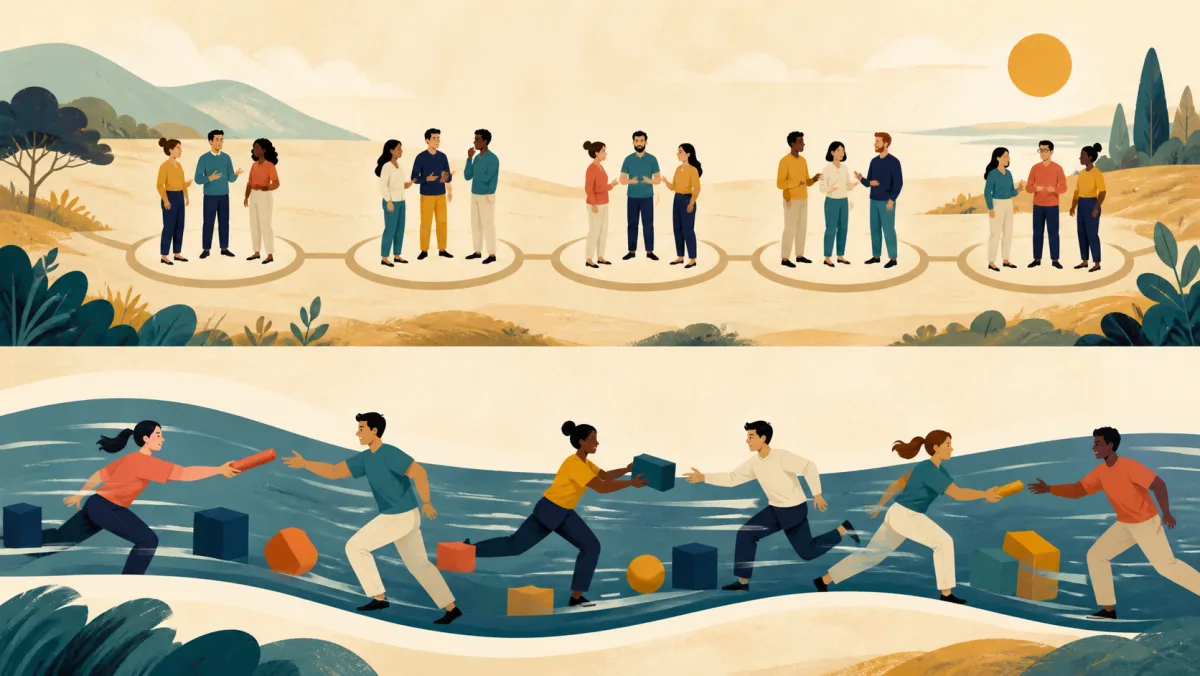
Cadence and pace measure different things, although people use both when discussing "how fast things are moving."
Use "cadence" for the "rhythm or frequency" of repeating events, such as meetings and releases. Use "pace" for the speed of ongoing work. A team may work quickly while keeping a slow, steady cadence, because the two do not have to match.
Quick check: recurring-event timing or work speed?
Use the article’s distinction about recurring-event timing or work speed to choose.
Ready to go beyond the quiz on "Cadence"?
Take the full learning path: hear it in real workplace contexts, watch short explanations, learn its nuances and when to use it, then practice using it yourself.
Start learning for free →Now see if you can use it naturally yourself.
Try it yourself
You know how to use "Cadence," too.
Keep going with the full learning path — more workplace contexts, related expressions, and continued practice.
Continue with "Cadence" →There's more to "Cadence" than it seems.
You've got part of it, but the full learning path goes deeper into its nuances, workplace contexts, and when it sounds natural — then gives you practice using it yourself.
Learn "Cadence" in depth →Two separate things about the same team
Pace is how fast work moves from moment to moment. Cadence is how often a certain event, such as a meeting, release, or report, comes around. A team may ship monthly and have a steady cadence. Within that month, however, its work pace may feel relaxed or frantic. A busy team can still keep calm, predictable weekly check-ins.
"The team is working at an intense pace this sprint, but our release cadence hasn't changed -- we're still shipping every two weeks."
This sentence keeps the ideas separate. The work grew more intense, so its pace rose, but the unchanged release schedule kept the same cadence.
Where people pick the wrong word
Less precise: "Let's increase our pace of stand-ups" -- stand-ups are separate recurring events; "increase our cadence of stand-ups" clearly focuses on their frequency.
People may discuss the "pace" of a series of events. However, stand-ups are "separate recurring events" that happen more or less often. When you mean "how often," cadence is the clearer and more precise choice.
Want to actually use "Cadence" naturally at work?
Understanding it is one thing. Practice its nuances, see how it works in real workplace situations, and use it yourself with feedback.
Start the "Cadence" learning path →The two can change on their own
"Slow down the pace, but keep the cadence" -- a manager asks for less daily work pressure without changing the meeting rhythm.
This sentence pattern is useful because it asks the team to change the workload while keeping the meeting schedule in place. Mixing up the two words would make that request less clear.
Why mixing them up is a problem
A common mistake is using "pace" for meeting or release frequency. Pace usually describes the speed of ongoing work, while cadence describes the rhythm or frequency of repeated events. Mixing them can point to the wrong issue. A manager may want to reduce the workload, but changing the meeting schedule would address a different problem.
Ongoing work versus repeating events
Here is a clear way to tell them apart: ask whether you mean ongoing work or a repeating event. The daily flow of tasks and decisions has a pace. Meetings, releases, and reports usually follow a cadence. The words therefore highlight two different features of the team's work.
A quick check for real conversations
When someone says work is "moving too fast" or "too slow," ask what they mean. They may mean pace, which includes the daily work pressure. They may instead mean cadence, such as having too many meetings. Changing the wrong one will not solve the real problem. A new meeting cadence cannot fix an unsustainable workload pace by itself.
Practice scenarios
Practice using cadence in these situations.
- separating the speed of ongoing work (pace) from how often events repeat (cadence)
- catching "pace" used by mistake when "cadence" is what's really meant
- telling a team to change one thing (intensity or schedule) without touching the other
Useful phrases to practice.
- "The team is working at an intense pace, but our release cadence hasn't changed."
- "Increase our cadence of stand-ups, not our pace of stand-ups."
- "Slow down the pace, but keep the cadence."
Separate workload speed from demo timing
Pace measures speed. Cadence describes the rhythm or frequency of repetition. They are separate features of the same team's work.
Keeping them separate lets you change one without suggesting that the other must change too.
Lyra Practice helps advanced non-native English professionals learn the nuance of high-value workplace expressions and practice using them in realistic scenarios, so their English sounds natural, precise, and senior at work. Try Lyra Practice.