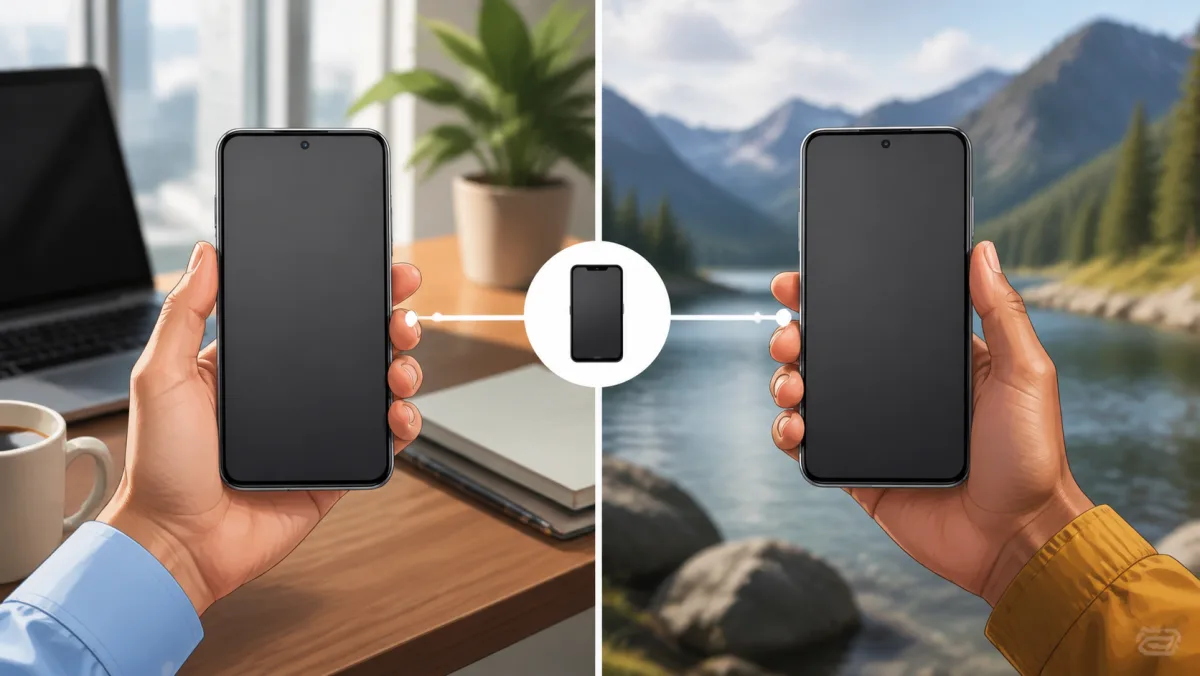
Cell phone and mobile phone usually describe the same portable phone. Cell phone is common in the United States. Mobile phone is also clear there and is common in many other places.
Today, Americans often shorten both to simply phone:
“I left my phone in the conference room.”
The context often makes clear whether phone means a mobile device or a landline.
Why does American English say cell phone?
The word cell refers to the cellular network that provides wireless service. Merriam-Webster defines a cell phone as a portable phone used in such a system.
Mobile phone focuses on the phone's portable nature. An FCC travel guide uses both terms together: mobile or “cell” phones. In that guide, both terms refer to the same kind of device.
Usage varies by region, speaker, and setting. Many speakers prefer mobile phone or mobile. Many U.S. speakers use cell phone, cell, or simply phone. None of these word choices alone marks a separate type of phone in ordinary use.
What might you hear at work?
“Can I reach you on your cell?”
Here your cell means your cell phone or cell-phone number.
“Please add your mobile number to the emergency contact form.”
This asks for a number linked to a mobile device. The form may contrast it with a home or office number.
“The site needs to work on mobile.”
In digital work, mobile can refer to phones, small screens, mobile browsers, or a mobile product version. It does not always name one device.
“Download the mobile app.”
This means an app made for a mobile operating system. People do not normally use cell app with this meaning.
A lot to take in? It is.
But Rome wasn't built in a day. Build your American workplace English one expression and cultural reference at a time—with curated explanations and structured practice in Lyra Practice.
Start a session →Cell, mobile, smartphone, and landline
These words highlight different distinctions:
- Cell phone / mobile phone usually describes a phone using a mobile network.
- Smartphone emphasizes computing features and apps.
- Phone is the everyday general word.
- Landline is phone service tied to a fixed location.
- Work phone means a phone or number supplied or designated for work, which may be mobile.
Many personal cell phones are smartphones. A basic mobile phone can still be called a cell phone.
If a form separates phone, mobile, and work, check its instructions. The fields may request different numbers, despite some overlap in the labels.
Natural things you can say
“Could you text the address to my phone?”
“My cell service is weak in this building.”
“I’ll join from my phone because I’m away from my laptop.”
“Is that your mobile number or the main office line?”
“I use a separate phone for work.”
All of these examples sound natural in a suitable context. Keep mobile phone if it fits your English. Regional variation is normal, and matching U.S. usage is not always necessary.
Common misunderstandings
In call my cell, the context usually makes the short form clear. In another context, cell can have a different meaning.
Mobile can also be an adjective meaning capable of moving:
“We have a mobile support team.”
This may mean that the team travels between locations. It does not necessarily mean that it works on phones.
Mobile-first is a product strategy term. Its exact meaning can vary by team. It often gives mobile design early priority and does not set a calling order.
Forms, privacy, and workplace boundaries
An employer may request a number for sign-in checks, alerts, or scheduling. The request alone does not explain the rules for using it. It also does not prove that a personal number is required.
If the purpose is unclear, ask:
“Is a personal cell number required, and how will it be used?”
“Can I provide my work number instead?”
“Should this contact be available outside working hours?”
These questions help define privacy and work boundaries. Policies and legal duties vary by employer and location. Ask the right internal contact when the answer matters.
If someone says “I’ll ping your phone,” they may mean a message, alert, or test signal. Digital language varies across teams. Confirm the channel when the next action matters:
“Do you mean a text message or a call?”
Travel and international teams
In an international meeting, you can mirror the other speaker's term. If they say mobile, you can also say mobile. If a hotel requests a cell number, check what contact format it needs. Add the country code when appropriate.
Roaming, SIM, and service-plan rules are separate from word choice. Two people may name the same device differently but face different carrier rules.
For another U.S. form label, see ZIP Code versus postal code. For boundaries around availability, see professional boundaries in the American workplace.