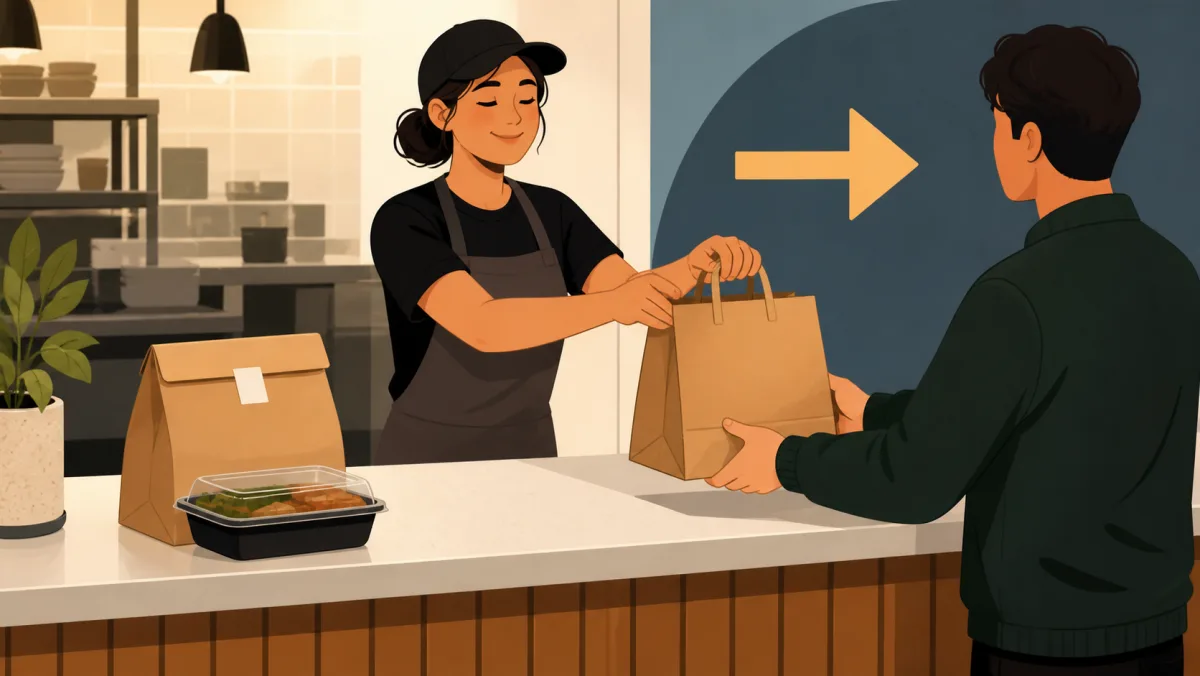
In the United States, people often call prepared food eaten elsewhere takeout. They often order an item to go. Takeaway is common in some other regions, and some U.S. listeners recognize it. Regional use varies.
“Let’s get takeout after work.”
“Can I get that to go?”
The first example uses takeout as a noun, while the second uses to go to tell staff how to prepare the order; the two-word verb take out is separate and has other meanings.
What is the basic U.S. pattern?
Takeout can name the food or the restaurant service:
“We ordered Thai takeout.”
“This restaurant does takeout.”
It can also modify another noun:
“Where is the takeout counter?”
To go can follow the item. It also appears in questions about the order:
“A coffee to go, please.”
“Is that for here or to go?”
In this use, to go means packed for you to take away. For here or to go? is a common question at a U.S. counter. A business may use different terminology on its signs or app.
Where does takeaway fit?
In British English and some other varieties, takeaway can mean prepared food eaten elsewhere. It can also mean a business that sells such food. A U.S. listener may understand:
“Shall we order a takeaway?”
The listener may reply with takeout, pickup, or delivery. Those terms are not exact matches, and the right word depends on how the food reaches you.
At work, takeaway often means a key lesson or conclusion from a discussion.
“My main takeaway from the meeting is that the deadline is flexible.”
That sentence is not about food. Context often makes the meaning clear. “Let’s discuss the takeaways over takeout” uses both senses on purpose.
A lot to take in? It is.
But Rome wasn't built in a day. Build your American workplace English one expression and cultural reference at a time—with curated explanations and structured practice in Lyra Practice.
Start a session →What might you hear while ordering?
At a counter:
“For here or to go?”
“To go, please.”
On a phone or app:
“Is this for pickup or delivery?”
Pickup means you or another person will collect the order. Delivery means the restaurant or a delivery service will bring it to an address.
At a full-service restaurant, you might want to take unfinished food:
“Could I get a box for this?”
“Could you box this up to go?”
Some people call the container a to-go box. You may also hear the older phrase doggie bag. It can sound playful or dated, so box is a simple choice.
How does the distinction appear at work?
A coworker might say:
“I’m ordering takeout for the team. Any dietary restrictions?”
“I’ll pick up lunch on my way back.”
“Do you want to eat here or get it to go?”
Clear replies include:
“Takeout works for me, but I need a vegetarian option.”
“I’ll join the order. Where should I send my selection?”
“I can pick it up if someone else places the order.”
Do not assume “We’re getting lunch” means the company will pay. It may only mean that coworkers are placing one order. If payment matters, ask in a neutral way:
“Is the company covering this, or should we pay individually?”
Takeout, pickup, curbside, and delivery
These terms overlap, and businesses do not label them in one fixed way.
- Takeout often means food prepared for eating away from the restaurant.
- Pickup means the customer collects the order.
- Curbside pickup means staff bring it to a set pickup area.
- Delivery means someone brings the order to an address.
- To go means an item is packed for you to take away.
Some businesses use takeout only for customer pickup. Others use it more broadly for food eaten off-site. A coffee ordered to go fits the broad idea, though people may just call it a coffee.
What should you say if the wording is unfamiliar?
On many sites, collection means customer pickup. If the choice is not clear, confirm:
“Does collection mean I pick it up at the restaurant?”
If someone says takeaway in a meeting, the topic may show the meaning. If it does not, ask:
“Do you mean the main conclusion?”
If packaging is the issue:
“I’m not eating here—could you package it to go?”
These direct questions reduce guesswork across dialects.
Regional and cultural variation
Restaurant terms vary by country, community, age, and business. Some U.S. menus use carryout for food the customer collects. Other menus use takeout or pickup for the same service.
Apps often use labels such as pickup and delivery. Follow the label when you place the order. In conversation, use the clearest local term and ask if a service detail matters.
For the payment language that often follows a meal, see check versus bill at a U.S. restaurant. To understand the non-food meaning, see how to use “takeaway” at work.