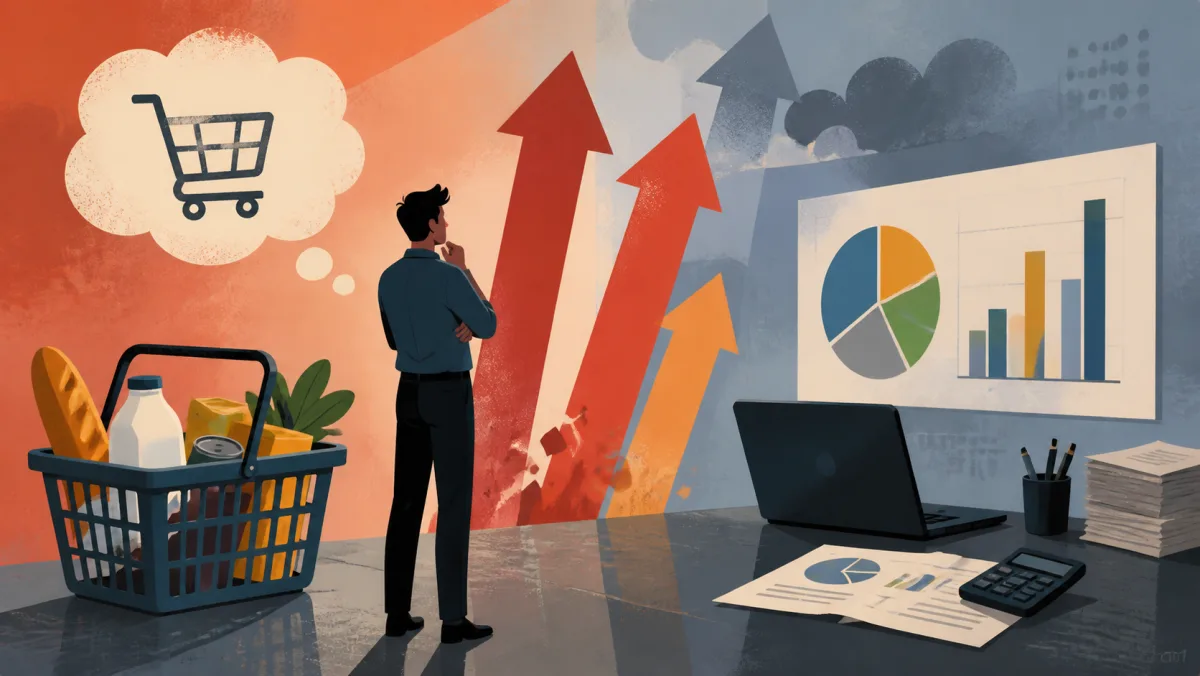
“Not in this economy” says current conditions make a choice too costly or risky. Sometimes the reason is serious:
“Can the company add three offices this year?”
“Not in this economy.”
In other contexts, it is a joke attached to something the economy cannot reasonably explain:
“Are you going to organize your inbox?”
“Not in this economy.”
The second speaker uses a large public issue as a playful reason for a small choice.
What do the literal words mean?
An economy is the system for work, money, trade, and goods in a place or time. Here, this economy points to current prices, interest rates, jobs, demand, or access to money.
The phrase often leaves its reasoning unstated. The implied logic is:
- current economic conditions are difficult or uncertain;
- the proposed action requires money, confidence, or stability;
- therefore, the action is not sensible now.
That logic can support a real business choice. However, the phrase alone does not name the condition that matters.
How does the humorous version work?
Two ideas drive the joke: overgeneralization and incongruity. People use the economy to explain hiring, prices, investment, and buying habits. The speaker applies that broad reason to a small or unrelated choice.
“Two desserts in one week? In this economy?”
Cost may be relevant, but the grand tone does not match the small choice.
Online versions often use “X? In this economy?” The exact origin is unclear. Know Your Meme traces wider use around the 2008 Great Recession. It later spread as an ironic catchphrase. This history does not identify one inventor.
Humor changes across groups and over time. Some hear a dated recession joke. Others still use the phrase casually.
A lot to take in? It is.
But Rome wasn't built in a day. Build your American workplace English one expression and cultural reference at a time—with curated explanations and structured practice in Lyra Practice.
Start a session →What might you hear at work?
Possibly serious:
“Are we replacing the whole fleet this year?”
“Not in this economy. Financing costs are too high.”
The next sentence gives the actual business reason.
Probably playful:
“Are you volunteering for another committee?”
“Not in this economy.”
The speaker likely means “Absolutely not” and uses economic language for humor.
Ambiguous:
“Are promotions likely this cycle?”
“Not in this economy.”
This could be a forecast, cynical shorthand, or a joke. Since careers are involved, ask for evidence. Do not treat the line as company policy.
How can you identify the intended tone?
A laugh or exaggerated tone may signal a joke. So may a topic unrelated to money. References to budgets, demand, inflation, or loans support a literal reading.
In text, punctuation can help but is not decisive:
“A team lunch? In this economy?!”
The punctuation suggests playfulness, but a real concern may sit beneath the joke.
What can you say in response?
For a low-stakes joke:
“Fair enough—maybe next quarter.”
“The budget has spoken.”
“I’ll take that as a no.”
For a decision that matters:
“Which economic factor changes the business case?”
“Is the constraint our budget, financing cost, or demand forecast?”
“Is that current company guidance or your expectation?”
These questions turn a vague reason into something the team can assess.
Could you use it naturally?
With familiar peers, the absurd version can be light:
“Inbox zero? Not in this economy.”
“A meeting with no follow-up meeting? In this economy?”
Safer literal alternatives include:
“That is outside the current budget.”
“Given current demand, expansion may be too risky.”
“We are pausing hiring while the forecast remains uncertain.”
“No, I do not have capacity for another committee.”
These choices show whether the limit is financial, strategic, or personal.
When is the phrase risky?
Do not use it to dismiss concerns about pay, staffing, or job security. The phrase can make a broad force seem like the final answer. Decision-makers should name the relevant limits and what could change them.
People do not experience the economy in the same way. The facts differ by country, field, home, and job. A joke about jobs or prices may hurt someone under financial stress.
The phrase is too vague for reports to leaders or investors. It is also too vague for a forecast. Name the economic measure and connect it to the decision.
For another line that can hide a real complaint inside humor, see the sarcastic meaning of “living the dream”. For a joke about office inefficiency, see why people say a meeting could have been an email.