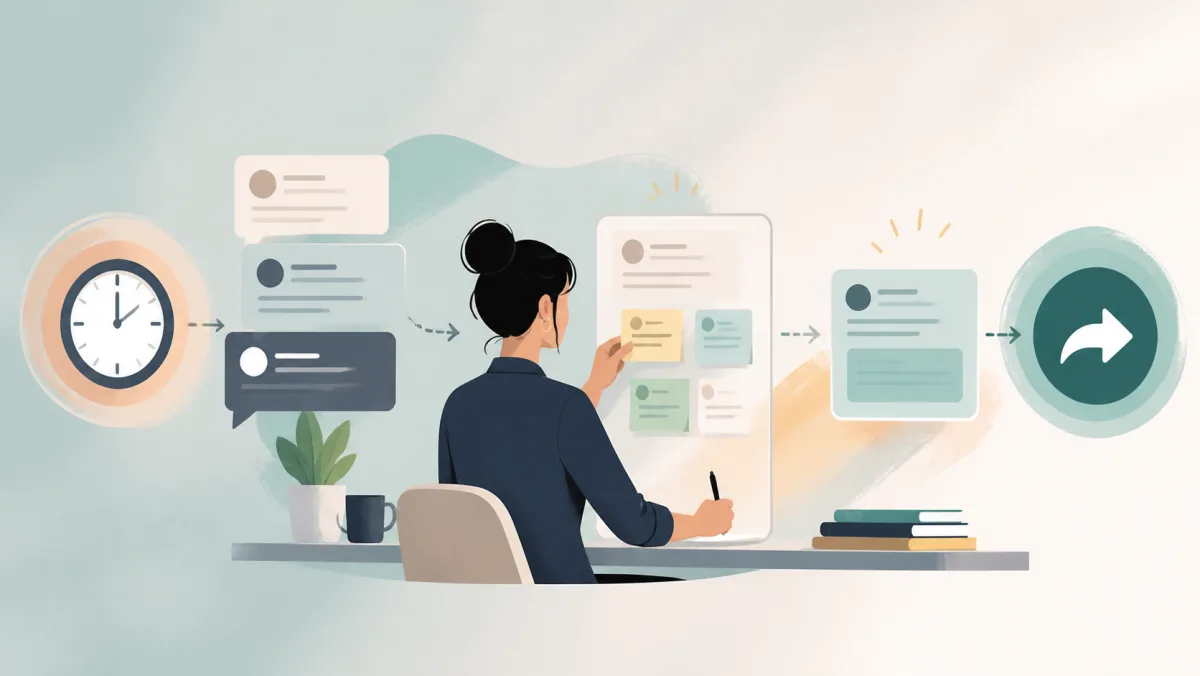
“I’ll get back to you” usually means I will reply later after I check, think, or gather more information. Its future form points to a later reply, but context shows how firm that promise is and when it may happen.
“I don’t have the pricing details in front of me. I’ll get back to you.”
The speaker has no answer now and plans to reply, but has not named a time or channel.
What does get back to someone mean?
Here, get back to someone means contact or reply to that person later. It does not mean physically return to the person.
“Let me check with finance and get back to you.”
The phrase can perform two useful functions:
- it keeps the speaker from making up an answer;
- it lets the talk move on while the speaker checks the facts.
That can be responsible workplace communication. The risk is a follow-up with no owner or clear deadline.
Is it always a firm promise?
In this phrase, I’ll states an intention to reply. Still, people use polite formulas with different levels of commitment, and the words do not prove that follow-up will happen.
Tone and details give useful clues:
“I’ll get back to you by Thursday after I confirm with legal.”
This is fairly concrete because it names the owner, date, and legal dependency.
“Interesting proposal. We’ll get back to you.”
This may be a real next step or a formal holding response while the decision is uncertain. The words alone do not prove which one.
“I’ll get back to you sometime.”
Sometime weakens the timing and may sound dismissive.
Warmth and brief wording do not prove sincerity. Politeness norms vary across teams and regions. Look for details you can verify, such as an owner, date, or next step.
A lot to take in? It is.
But Rome wasn't built in a day. Build your American workplace English one expression and cultural reference at a time—with curated explanations and structured practice in Lyra Practice.
Start a session →What might you hear at work?
“I’ll get back to you once the team reviews it.”
The reply depends on a review, but there is no review date.
“Can I get back to you on that?”
The speaker asks to delay the answer. A natural reply is, “Of course—when should I follow up?”
“We’ll get back to all candidates next week.”
This gives a response window rather than an outcome. It does not mean the person will receive an offer.
“Let me get back to you.”
Let me can make the request for time sound softer. It still points to a later reply.
What can you say naturally?
When you need time:
“I need to verify that. I’ll get back to you by 2:00 p.m. Eastern time tomorrow.”
When timing is not yet known:
“I’ll confirm the owner today and then send you a realistic response date.”
When you receive a vague promise:
“Thanks. When would it be reasonable for me to follow up?”
When a dependency matters:
“We need the answer before Friday's customer call. Can you confirm whether that timing is feasible?”
These phrases clarify ownership and timing without forcing a deadline the other person cannot meet.
Get back to you versus follow up
Get back to you emphasizes a reply to the person. Follow up emphasizes the next action after an earlier exchange.
“I’ll get back to you with the answer.”
“I’ll follow up with finance and copy you.”
The second may mean contacting finance rather than replying to the first person. In practice, the two phrases can overlap.
For a detailed comparison with another corporate phrase, see circle back versus get back to someone.
Time, channel, and ownership
A clear follow-up can name:
- who owns the reply;
- what they will send;
- when they plan to send it;
- where they will send it;
- what dependency could change the timing.
You may not need all five in casual talk, but they help when an important decision depends on the reply:
“I’ll email the confirmed tax treatment by Wednesday at noon Central time, after our adviser responds.”
For legal, tax, financial, or HR issues, do not use confident words in place of qualified advice. Verify the evidence and name the qualified person or team that approved the answer. Promise a checked reply rather than an improvised guess.
In international teams, spell out the date and time zone. Tomorrow may have begun where the other person is; see later today and by tomorrow.
What if no response arrives?
A polite follow-up can cite the earlier promise without claiming bad intent:
“Following up on the pricing question from Tuesday. Do you have an updated response date?”
“You mentioned checking with legal. Is there anything you need from me to move that forward?”
Workplace authority matters. A junior colleague may need an agreed path for escalating the delay because more informal reminders may not be safe or useful. A client may need a short status update even if the final answer is not ready.
Do not treat every delay as intentional avoidance. Workload, dependencies, leave, and time zones can cause it. Still, a pattern of vague promises is weak planning evidence. Record the dates and use that evidence when you set the next step.
Recognition versus production
When you hear “I’ll get back to you,” recognize a plan to reply later, not an answer or decision. Look for a clear point such as by Thursday or after the review.
When you use it, add the next reliable step you can own. If you cannot promise the final answer, set a time for a status update:
“I may not have the decision tomorrow, but I’ll update you on progress by 4:00 p.m.”
For rough timing, see how many days “a couple of days” means. For end-of-day promises, see EOD versus COB.
The practical takeaway
“I’ll get back to you” usually signals an intention to reply later, but not a specific answer or deadline. Add a realistic date, time zone, channel, or next milestone. Ask about timing when your work or an important decision depends on it.