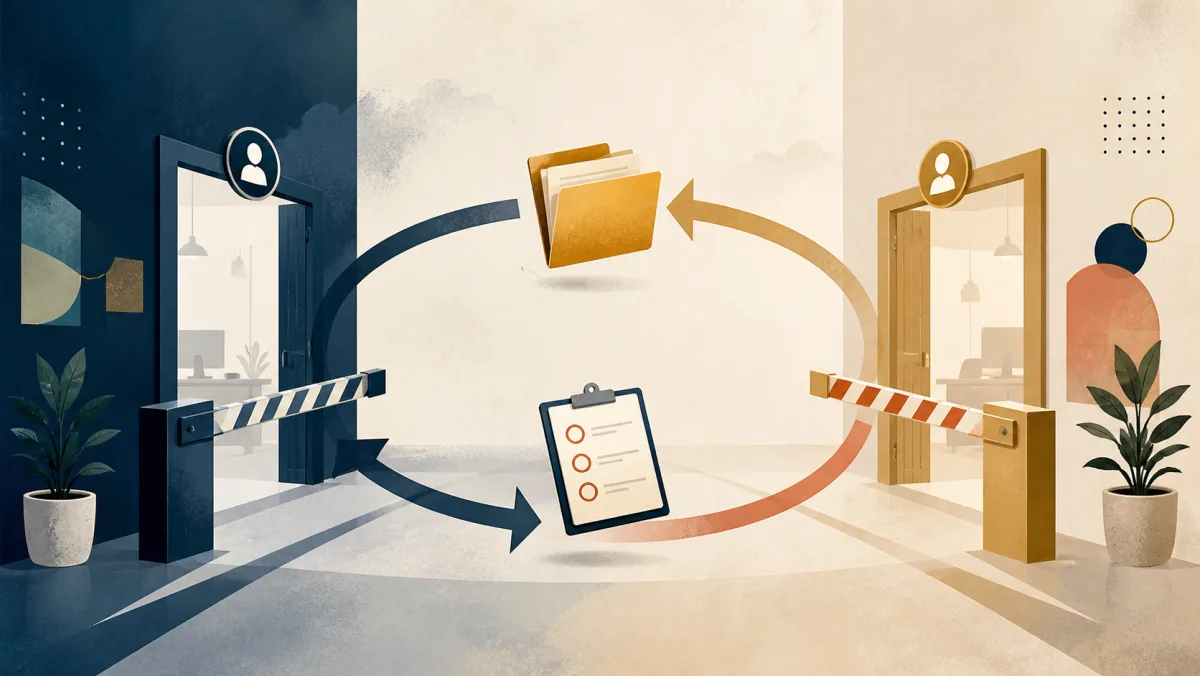
A catch-22 is a situation where one requirement cannot be met until another is met, but the second cannot be met until the first is met.
Natural use depends on more than knowing that definition. You also need the right grammar, enough context, and a tone that fits the situation.
Start with the core workplace use
Use catch-22 when the situation matches the full meaning above. Avoid using it only because it sounds vivid or familiar. The expression should help the listener understand your point faster.
Common patterns
be in a catch-22face a catch-22create a catch-22a classic catch-22avoid a catch-22
These patterns show the words that normally sit around the expression. Replace the placeholders with a real person, plan, issue, or time frame. Keep the structure intact when it is a fixed phrase.
Want to get better at distinctions like this?
Lyra Practice helps you learn the nuance of high-value workplace expressions, then practice using them in realistic situations.
See how Lyra Practice works →Natural workplace examples
Example 1
“We cannot test in production without access, but security will not grant access until we show production test results—a classic catch-22.”
Example 2
“Small suppliers face a catch-22: they need approved-vendor status to bid, but they need a completed contract to qualify.”
Example 3
“The policy creates a catch-22 for new hires who need system access to finish the required training.”
Each example gives the listener a reason to accept the expression. It names the relevant action, condition, or consequence instead of leaving the phrase unsupported.
Do not use it as a loose synonym
| Nearby expression | Key difference |
|---|---|
| dilemma | a difficult choice between alternatives, without necessarily containing a circular dependency. |
| deadlock | a standstill because parties or processes cannot move forward. |
| bottleneck | a step whose limited capacity slows the whole flow. |
| paradox | an apparently contradictory statement or situation that may still be true. |
The alternatives are not always wrong. They simply make a different claim. Use the smallest claim that your facts support.
Match the tone to the setting
Catch-22 is common but somewhat informal and allusive. In technical, formal, or client-facing writing, circular dependency or a direct statement of the two blocked requirements may be clearer.
In an internal conversation, an idiom or informal label may be efficient. In a formal record, performance conversation, legal context, or client message, plain factual language is often safer. Describe what happened, who owns the next step, and what decision is needed.
A practical speaking formula
Try this sequence:
- State the situation.
- Use catch-22 to frame the point.
- Add the evidence or consequence.
- Ask for the next action when one is needed.
This keeps the expression useful. It also prevents the phrase from replacing the facts.
Quick self-check
Before you send or say the sentence, check that the grammar follows one of the natural patterns. Then check the intensity. Finally, ask whether your audience will understand the cultural reference or informal tone.
Use the expression when it makes the message more precise. Switch to direct wording when precision, fairness, or global clarity matters more than color.
Lyra Practice helps advanced non-native English professionals learn the nuance of high-value workplace expressions and practice using them in realistic scenarios, so their English sounds natural, precise, and senior at work. Try Lyra Practice.