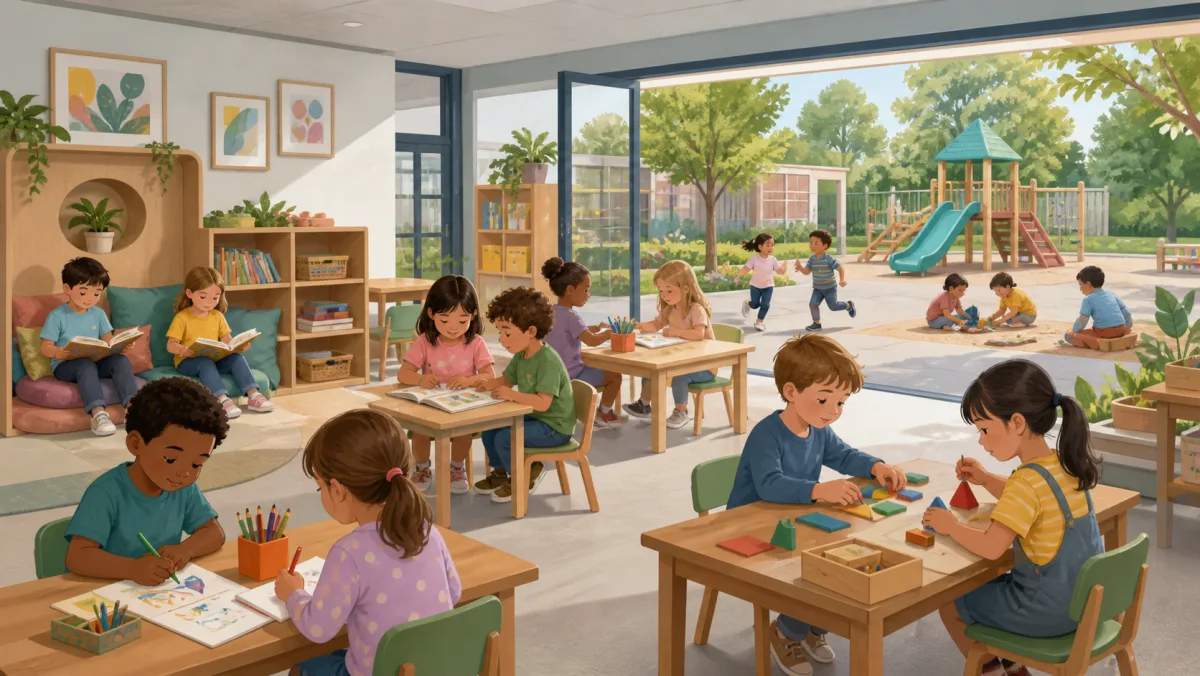
Elementary school is the usual US term for the early school years. Primary school is clear but sounds more international or formal to many Americans.
"My daughter is in elementary school."
At work, this sentence may explain pickup, childcare, or schedule needs. It does not reveal the grade because local grade spans vary.
What grades are elementary school?
A common arrangement is kindergarten through grade 5, written K–5. Other districts use K–6, K–8, or another span. NCES says state and local practice determines the label. Its reporting definition can include grades from pre-K through grade 8.
There is no single US rule that every elementary school ends after fifth grade.
Common possibilities include:
- K–5: kindergarten through fifth grade
- K–6: kindergarten through sixth grade
- PK–5: prekindergarten through fifth grade
- K–8 school: elementary and lower-secondary grades in one school
When age or scheduling matters, ask for the grade. Do not infer it from elementary school alone.
What does “primary school” mean?
International sources often use primary education for the early years of formal schooling. US reports may also use primary when comparing education systems.
In everyday American speech, primary school may sound international or formal. It is not wrong, but it is less often the local label. Parents are more likely to say elementary school.
"I taught primary school in my home country."
This is clear. For a US job application, you might add:
"The students were in the equivalent of U.S. elementary grades."
Use equivalent with care. Curricula, teaching credentials, and grade structures can differ despite similar student ages.
A lot to take in? It is.
But Rome wasn't built in a day. Build your American workplace English one expression and cultural reference at a time—with curated explanations and structured practice in Lyra Practice.
Start a session →Where does kindergarten fit?
In many US school systems, kindergarten is part of elementary school. It is the year just before first grade.
The standard spelling is kindergarten, not kindergarden. A simple US pronunciation guide is KIN-der-GAR-tən. Fast speech may soften some sounds, but the spelling keeps the t.
Pre-K, or prekindergarten, comes before kindergarten. Local systems decide where it is offered and how it is funded.
What might you hear at work?
"Elementary school gets out early on Wednesdays."
The colleague may be explaining a regular schedule need.
"We have an elementary-school open house tonight."
At an open house, families may visit, meet staff, or learn about programs. Details vary by school.
"The benefit covers primary and secondary school tuition abroad."
In a global assignment policy, primary may be the formal category. US employees may still say elementary school in conversation.
"Her teaching experience is at the primary level."
This may describe a level across systems, not an official US job title.
What can you say naturally?
In U.S. workplace small talk:
"My child is in third grade at a local elementary school."
For scheduling:
"I need to leave at 2:45 for elementary-school pickup. I will finish the review after 4:00."
For an international comparison:
"I taught primary school, roughly equivalent to the early elementary years in the United States."
If you are unsure which local level a colleague means:
"Which grades does elementary school include in your district?"
That question is reasonable because local grade structures differ.
Avoid assumptions about parenting and schooling
School schedules often arise in discussions about availability. Respond to the work need without judging the family:
"Thanks for the notice. Let's schedule the review before pickup."
Do not assume one parent should handle all school duties. Children also attend many kinds of schools and programs. These overlapping options include traditional public schools, public charter schools, private or religious schools, online programs, and home-school arrangements. Children may receive special education services across several of these settings. Terms may differ across systems.
School labels can also hint at access and cost. A casual question may unintentionally touch on wealth or private tuition. Let the parent choose how much to share.
For the next stage, see middle school versus junior high. For the complete sequence, see U.S. school levels from pre-K through graduate school.